Market research tools for futures day traders: the short list that matters
You do not need forty tabs and six subscriptions. You need four tools that earn their place. Here is the short list, and the shiny pile you can skip.
Overwhelm is not preparation
Open your bookmarks. Count the trading tools you pay for and never open. The scanner, the second scanner, the sentiment app, the newsletter, the alert bot. Overwhelm is not preparation. It is procrastination with a subscription. A futures day trader needs a short, sharp kit. Here is the whole list.
The four tools you actually need
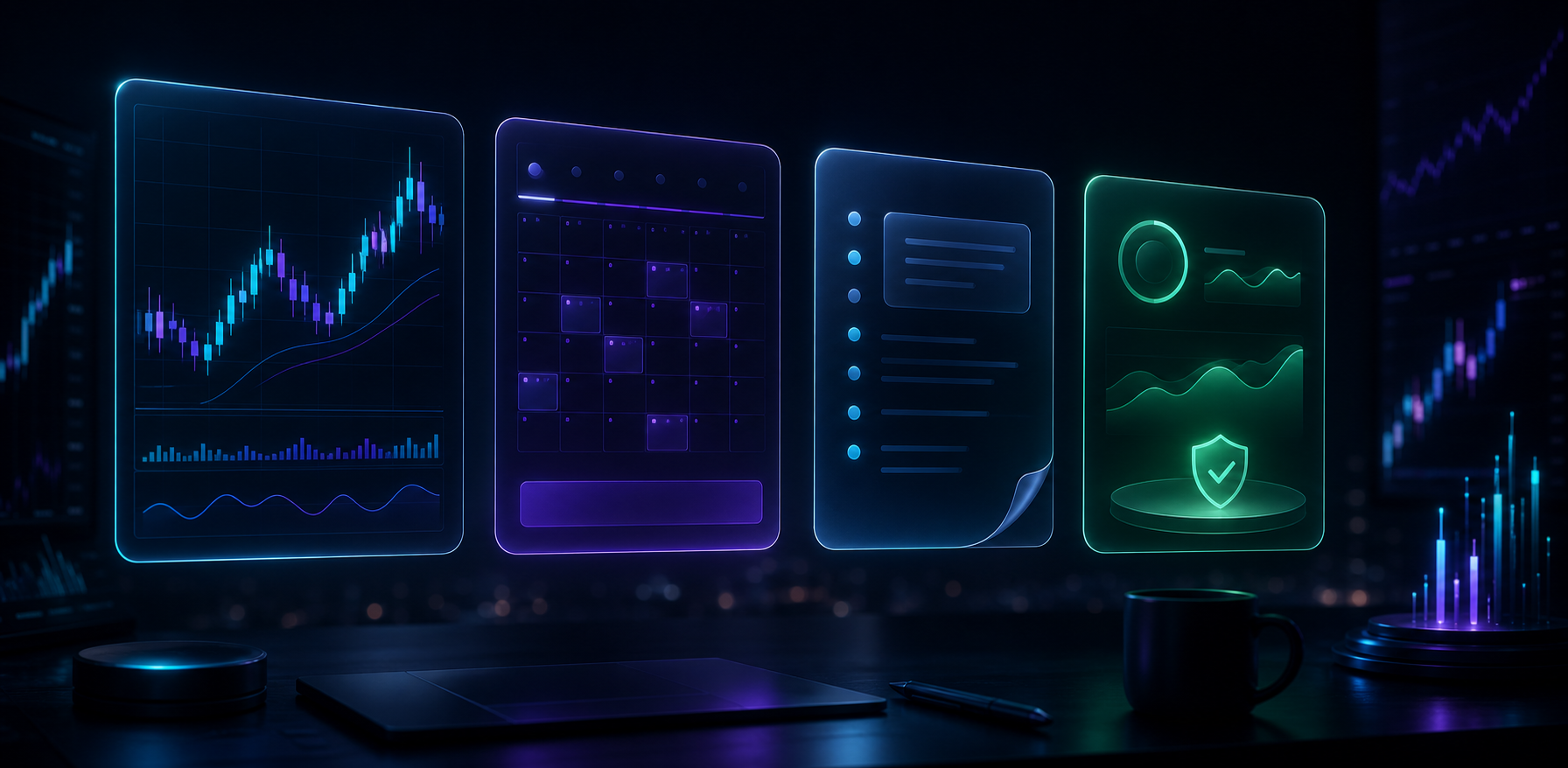
- A charting platform you trust. This is the one place you cannot cut. You need clean, fast charts, reliable data on NQ, ES, YM, GC, and CL, and the ability to mark levels and drop simple structure. Stability over features. A platform that lags or disconnects mid-session is not saving you money, it is costing you fills. Learn one deeply instead of collecting five.
- An economic calendar. Not for predictions. For timing. High-impact releases and the session opens move volatility on a schedule you can see in advance. Knowing that news drops in ten minutes tells you when to stand aside and when the range is about to break. This is the cheapest edge in trading: not getting run over by an event you could have circled that morning.
- A trading journal. The tool that turns experience into skill. Every trade logged with your bias, level, trigger, risk, and result. Without it, you repeat the same mistake for months and call it bad luck. With it, the leak has a name by the end of the week. A spreadsheet counts. The point is honesty, not software.
- A prop-firm account. For most day traders, this is how you trade meaningful size without risking your savings. It also imposes rules, daily loss limits, drawdown caps, that force discipline a personal account never will. Passing the challenge is a skill in itself: consistent risk, defined setups, no hero trades. Treat the evaluation as the training, not the toll.
Charting, calendar, journal, funded account. That is the kit. Everything else is optional, and most of it is a distraction dressed as an edge.
The pile you can skip
The paid signal group that tells you what to buy and never why. The alert bot that pings you into trades with no plan. The "AI" sentiment dashboard scoring tweets. The fifth indicator subscription. The premium scanner for a market you trade five instruments in. None of it survives the delete test.
Here is the villain, said plainly: complexity is sold to you because complexity is profitable to the seller. A confused trader buys the next tool. A clear trader does not need it. Every shiny app that promises to think for you is quietly betting you never learn to think for yourself.
Why less is the edge
Four tools, used every day, beat forty used never. A short kit means you spend your energy on the read and the execution, not on managing a stack of software. It cuts the setup time before the New York open from an hour of tab-switching to a five-minute routine: mark the levels, check the calendar, define the plan, log the result after.
The tools do not make the trader. The process does. What turns this short list into results is a method for reading the chart and a plan for acting on it, applied the same way every session.
Trade the process, not the tab count
If your kit has grown faster than your account, strip it back to the four that matter and put your effort into the read. That is the environment inside The Market Lens: the Fractal and Expansion Models, 200+ hours of on-demand training, daily live New York session analysis, and a community focused on passing prop-firm challenges. The Whop rating sits at 4.9 stars, and members report $145K+ in payouts.
Futures trading carries real risk of loss, and no tool or account type guarantees a profitable outcome.
More Articles
How professional futures day traders actually read the market
Guessing is not analysis. Here is how disciplined NQ and ES traders build a repe...
Technical vs fundamental analysis for the intraday futures trader
For an NQ or ES day trade, one of these drives your decision and one mostly sets...
Reading the trend and market structure without lagging indicators
A moving-average crossover tells you about the move after it happened. Structure...
Market indicators explained: why most of them lag, and what to read instead
Your indicators are not broken. They are just late. Here is what they actually m...